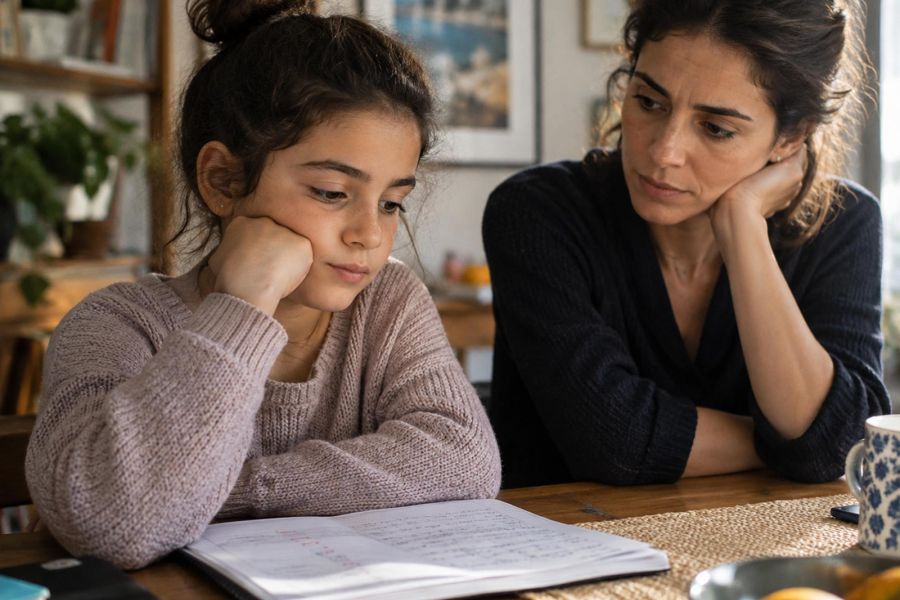
Artificial Intelligence is already part of our children’s lives.
So perhaps the question is not whether they should use it. It is how they can learn to use it without stopping thinking for themselves.
The World Economic Forum places AI and big data among the fastest-growing technology skills. Yet in the same report, analytical thinking remains the most important core skill for employers, while creativity, adaptability and curiosity are also rising in importance.
That matters.
Because in a few years, being able to ask AI to write a text, create an image or find information will probably no longer be a particular advantage. Almost everyone will be able to do it.
The real difference will lie elsewhere: Who can ask the right question? Who recognises that an answer may be wrong? Who knows enough to check it? Who can turn technology into an idea of their own?
The World Economic Forum notes: “Analytical thinking remains the top core skill for employers.”
A different way to talk to children about AI
When a child asks AI for an answer, we can ask: “What did you think before you asked it?”
Then: “How do we know this answer is correct?” or “Can we find a second source?”
And rather than using technology only to make things easier, we can use it to create: a story, a video, a presentation, a project or a solution to a real problem.
It also helps to introduce one simple principle early on: personal details, photographs, addresses, school information and other private information should not be shared casually with digital services.
So the real goal is not to raise children who know how to use AI.
It is to raise children who keep thinking when AI is beside them.
Tomorrow Me Labs: A thought for tomorrow:
We cannot know exactly what the world our children grow up in will look like. But we can give them more opportunities to discover, think, create and believe in what they can do.